

What is Blood Flow Restriction?
Blood Flow Restriction (BFR) is an evidence-based training technique that involves the use of specialized tourniquets, or “cuffs,” to partially restrict venous blood flow from the working muscles during low-intensity exercise (typically 20-30% of maximum effort). As a rehabilitation and training tool, BFR serves as a catalyst to trigger muscle growth, strength gains, and accelerated tissue regeneration.
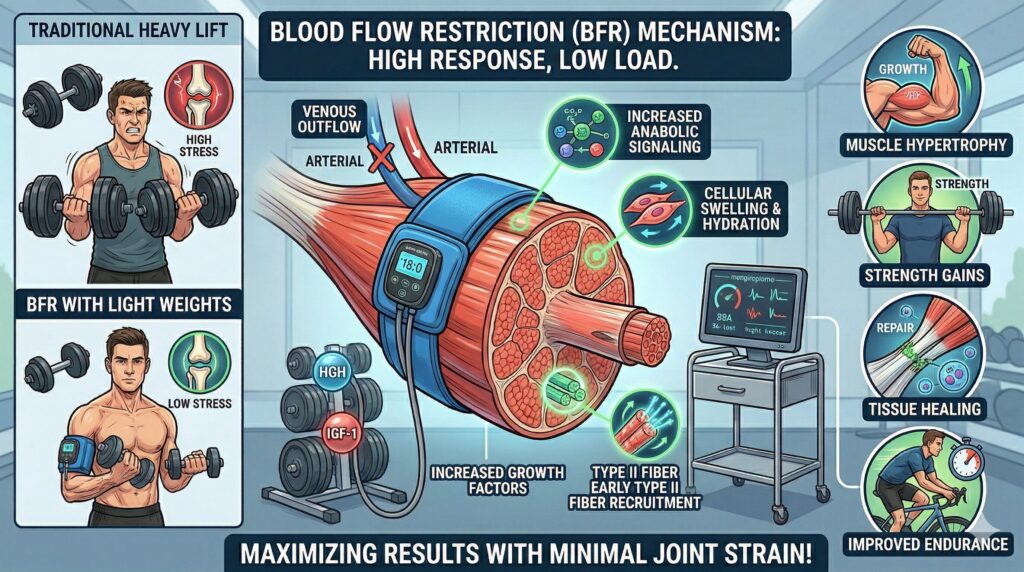
- Muscle Growth: BFR training has been shown to stimulate significant muscle growth, making it an efficient method for hypertrophy.
- Strength Gains: Despite using lighter loads, BFR targets fast twitch muscle fibers, leading to increased strength.
- Decreased Pain: BFR training has been shown to reduce post-operative pain and knee arthritis pain.
- Accelerated Aerobic Fitness Gains: BFR can trigger significant gains in VO2 max in as little as 2-4 weeks
- Reduced Joint Stress: With lighter weights, BFR minimizes stress on joints, making it suitable for rehabilitation and injury prevention.
- Efficient Workouts: BFR allows for shorter workouts due to its effectiveness in recruiting muscle fibers with lighter loads.
- Improved Tissue Health: BFR has been shown to improve the health and durability of tendons and connective tissue.
- Faster Recovery: BFR has been shown to accelerate muscle growth and repair, leading to faster recovery after an injury or surgery.
- Muscle Growth: BFR training has been shown to stimulate significant muscle growth, making it an efficient method for hypertrophy.
- Strength Gains: Despite using lighter loads, BFR targets fast twitch muscle fibers, leading to increased strength.
- Decreased Pain: BFR training has been shown to reduce post-operative pain and knee arthritis pain.
- Accelerated Aerobic Fitness Gains: BFR can trigger significant gains in VO2 max in as little as 2-4 weeks
- Reduced Joint Stress: With lighter weights, BFR minimizes stress on joints, making it suitable for rehabilitation and injury prevention.
- Efficient Workouts: BFR allows for shorter workouts due to its effectiveness in recruiting muscle fibers with lighter loads.
- Improved Tissue Health: BFR has been shown to improve the health and durability of tendons and connective tissue.
- Faster Recovery: BFR has been shown to accelerate muscle growth and repair, leading to faster recovery after an injury or surgery.
BFR helps you avoid muscle atrophy during times of weight-bearing restrictions, and quickly build back muscle mass when lost due to required immobilization.
Learn More: Blood Flow Restriction (BFR): The ultimate shortcut to building muscle
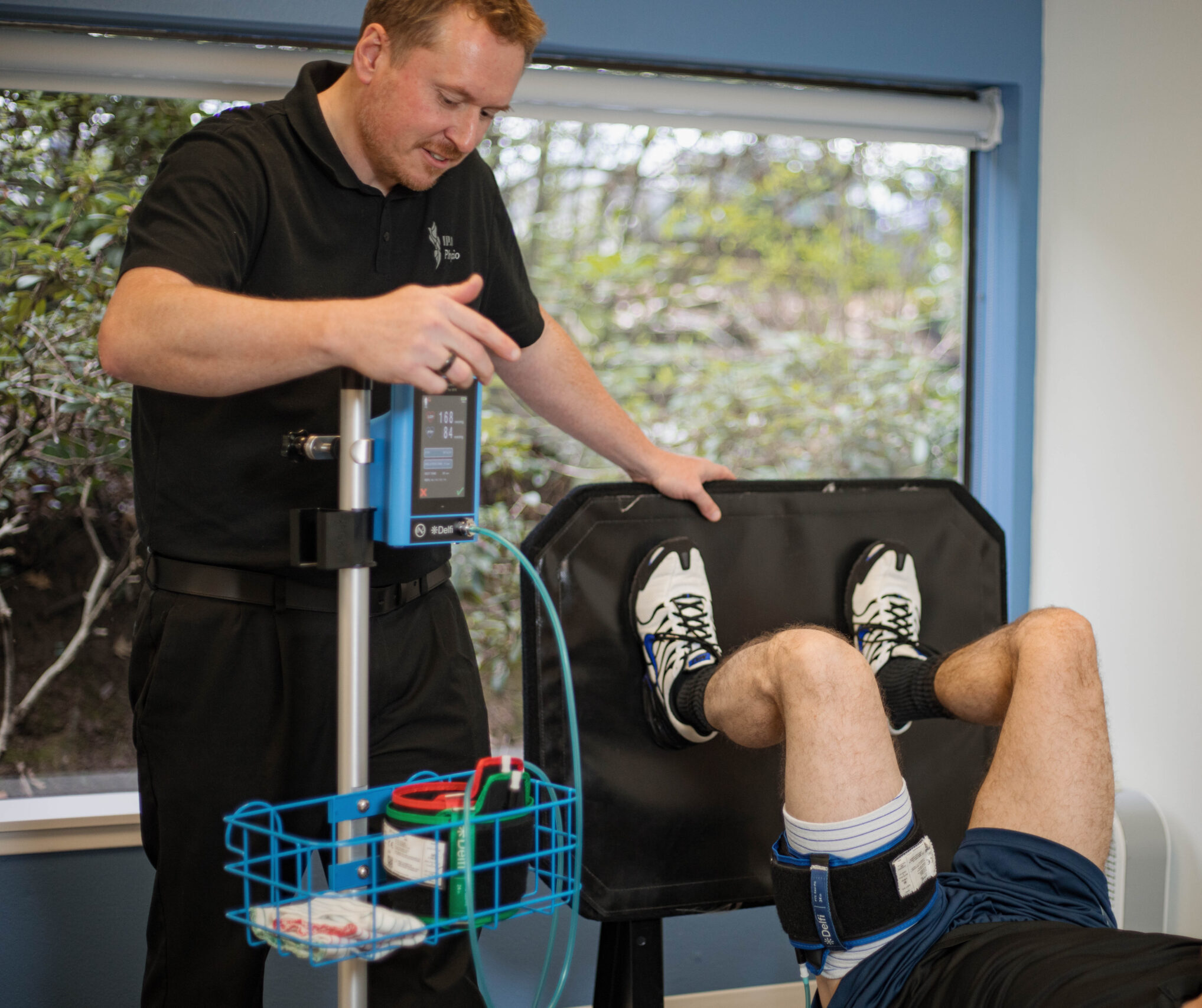
Are all Blood Flow Restriction Units the Same?
IPA Physio uses specially designed Personal Tourniquet Systems from Delfi, which are considered the gold standard in BFR training. They are used by:
- Professional sports teams
- The military
- The top rehab clinics across the globe
Prior to purchasing the Defli units, clinicians are required to complete a certification process which evaluates their knowledge and understanding of how to safely and effectively perform BFR training.
Safety Considerations
While BFR can be highly beneficial when done correctly, it’s crucial to use appropriate pressures and techniques to prevent any potential risks. Always consult with a healthcare professional or a trained BFR specialist before starting BFR training.
Our Approach to BFR
At IPA Physio, we prioritize safety and effectiveness in all our BFR programs. Our certified therapists specialize in BFR techniques, ensuring that you experience the maximum benefits while minimizing any risks. Whether you’re an athlete looking to enhance performance or someone recovering from an injury, we tailor our BFR programs to suit your specific needs and goals.
Experience the power of Blood Flow Restriction training with us and Discover your Potential!